


Facing the Fall Tune-Up: Is Your Aging System Ready for Winter?
October in Louisiana means the first real break from the intense summer heat is finally arriving, and your air conditioner is getting a much-needed rest. However, this transition period brings a new challenge: preparing your home for the upcoming heating season. Repairing vs. retiring a 20-year-old HVAC: when we advise Baton Rouge homeowners to finally upgrade is a conversation we have daily during this critical window. If you are weighing your options, learning more about replacing an aging HVAC system can help you make a confident, informed choice before the cold weather sets in.
Scheduling an October pre-winter inspection for a system that has been running for two decades often comes with a profound sense of anxiety. You might find yourself holding your breath, wondering if the technician will find another expensive component on the brink of failure. The dilemma is incredibly common: do you pay for yet another round of patchwork repairs to squeeze out one more season, or do you make the definitive call to retire the unit?
Most homeowners assume that reaching the twenty-year mark automatically means the system is dead. The truth is, professional technicians do not rely on the calendar alone to condemn a unit. Instead, we use concrete performance thresholds, detailed operational metrics, and historical maintenance data to determine if a system is genuinely exhausted. By shifting the focus from arbitrary age limits to measurable performance data, you can take the guesswork out of your home comfort decisions and invest your resources wisely.
The Compounding Strain of Baton Rouge Summers on 20-Year-Old Original Equipment
To truly understand the condition of your HVAC system, you have to look at the environment it operates in. A unit that has survived two decades in a mild, northern climate has lived a very different life than one installed in the Deep South. Here in Louisiana, 20-year-old original equipment has endured significantly more run-hours than the national average, operating under conditions that test the limits of mechanical engineering.
The Hidden Toll of High Humidity
The defining characteristic of a Baton Rouge summer is the extreme, oppressive humidity. Air conditioning systems do not just cool the air; they are also responsible for dehumidifying your home. Because moisture holds heat, your compressor has to work overtime to pull that heavy, wet air across the evaporator coil to extract the humidity before it can effectively lower the ambient temperature. Over the course of twenty years, this constant demand for dehumidification forces the compressor to run in extended, grueling cycles.
This compounding strain accelerates component wear exponentially. The constant vibration, thermal expansion, and electrical load degrade the internal windings of the compressor and weaken the fan motors. What might look like normal wear and tear on paper is actually the result of thousands of extra hours spent battling Gulf Coast moisture.
Transitioning to Heating Season
When October arrives, this accumulated summer wear-and-tear sets a precarious stage for winter. The components that were pushed to their absolute limits in August are now expected to reverse their operation or hand off the workload to a furnace that has been sitting dormant for months. If the underlying strain from the summer is not addressed, the sudden shift in operational demands frequently leads to catastrophic failures right when you need reliable heating the most.
Performance Metric 1: The Reality of Declining Heat Transfer Efficiency
When evaluating 20-year-old original equipment, one of the most critical non-financial thresholds we measure is heat transfer efficiency. Our decades of deep local experience maintaining original systems have taught us to rely on measuring this declining heat transfer efficiency rather than just looking at the manufacturer’s age limit. If your system is failing this metric, no amount of basic maintenance will restore its original capability.
Understanding Heat Transfer
Heat transfer efficiency is simply the system’s ability to move heat from one place to another. In the summer, it moves heat out of your home; in the winter, a heat pump moves heat into your home, or a furnace generates it and transfers it into your airflow. This entire process relies on the integrity of your evaporator and condenser coils. Over two decades, these coils undergo significant physical degradation.
When this efficiency drops below a critical threshold, the system consumes massive amounts of energy just to maintain a baseline level of comfort. If you decide that retiring the unit is the best path forward, understanding the professional HVAC installation process ensures that your new system is sized and calibrated to deliver maximum heat transfer efficiency from day one.
Here is how the degradation of heat transfer efficiency typically unfolds in older units:
- Micro-abrasions and Oxidation: Years of exposure to moisture, dust, and airborne contaminants cause the copper and aluminum coils to oxidize. This oxidation creates a microscopic barrier that insulates the coils, preventing them from absorbing or releasing heat effectively.
- Development of Micro-Leaks: The constant expansion and contraction of the metal over twenty years eventually leads to tiny stress fractures. These micro-leaks allow refrigerant to slowly escape, altering the pressure balance required for optimal heat transfer.
- Extended Cycle Times: Because the coils can no longer transfer heat efficiently, the system has to run much longer to achieve the temperature set on your thermostat. This not only drives up your energy usage but also accelerates the mechanical breakdown of the blower motor and compressor.
Performance Metric 2: Breakdown Frequency and the R-22 Phaseout
Another major indicator that an HVAC system has reached the end of its viable life is a noticeable shift in the nature of its breakdowns. In a younger system, a failed capacitor or a worn contactor is an isolated event. You replace the part, and the system returns to normal operation. In a twenty-year-old system, repairs often become systemic and cascading.
The Domino Effect of Component Failure
When one major component in an aging system begins to fail, it places abnormal electrical and mechanical stress on everything connected to it. A struggling blower motor can cause the evaporator coil to freeze, which then sends liquid refrigerant back to the compressor, potentially destroying it. If you are constantly wondering about the indications you need to repair or replace your air conditioner, a pattern of frequent, interconnected component failures is one of the clearest signs that patching the system is no longer a sustainable strategy.
The R-22 Reality Check
Beyond mechanical failure, homeowners with twenty-year-old systems face a significant logistical hurdle: the refrigerant. Systems installed two decades ago were designed to use R-22 refrigerant. In 2020, the Environmental Protection Agency (EPA) mandated a complete phaseout of the production and import of R-22 due to its environmental impact.
Today, repairing an R-22 leak is increasingly impractical. Because new R-22 cannot be produced, the industry relies entirely on recovered and recycled supplies. This scarcity makes recharging an older system incredibly difficult and highly restricted by environmental regulations. When a 20-year-old system develops a refrigerant leak, it is rarely a simple fix; it is usually the final indicator that the equipment needs to be retired.

Looking Beyond the Unit: Assessing Ductwork and Insulation Integrity
When we evaluate a 20-year-old HVAC system, we cannot look at the machinery in isolation. The air conditioner and furnace are only part of the equation; they rely entirely on the infrastructure built into your home. A two-decade-old system is almost always connected to two-decade-old ductwork and insulation.
Evaluating Your Home’s Airflow Infrastructure
Over time, ductwork can sag, joints can separate, and the original mastic sealant can dry out and crack. When ducts leak, you lose conditioned air into your attic or crawlspace before it ever reaches your living areas. This poor duct integrity can make even a perfectly functioning unit perform terribly. If you install a brand-new, high-efficiency system onto compromised ductwork, you will not experience the comfort or the efficiency you expect.
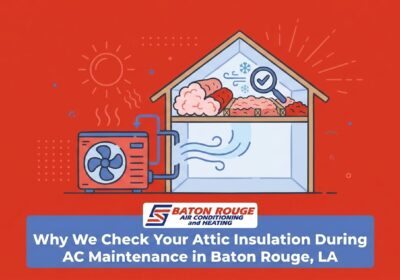
A comprehensive evaluation checks these supporting elements to ensure that an upgrade will actually solve your comfort issues. One Baton Rouge homeowner asked us to evaluate their system during a summer maintenance visit because they had growing concerns about their home’s insulation and duct integrity. Our technician performed a thorough inspection of the duct components and attic insulation alongside the regular HVAC maintenance. We found that the insulation and ducts were actually in okay shape, allowing us to proceed with a complete service on the unit itself with confidence. However, in many older homes, addressing ductwork is a necessary step in the retirement and replacement process.
Side-by-Side: Patching for Another Season vs. Upgrading Now
When you are standing in front of your thermostat, trying to decide whether to schedule another repair or start looking at new models, it helps to see the options laid out clearly. Recognizing the signs you need HVAC repair is only the first step; the next is deciding if that repair is truly worth the investment on a system that has been running for twenty years.
Here is a direct comparison of what you can expect when choosing between patching your aging unit and upgrading to modern equipment:
| Factor | Patching the 20-Year-Old Unit | Upgrading to a Modern System |
|---|---|---|
| Reliability | Offers short-term relief, but leaves older, stressed components vulnerable to cascading failures. The lifespan clock continues ticking. | Completely resets the lifespan clock. Modern components provide dependable, uninterrupted operation through extreme weather. |
| Comfort & Humidity | Struggles with heavy Louisiana humidity; often results in uneven heating and hot spots due to declining heat transfer efficiency. | Advanced variable-speed technology provides precise climate control, superior dehumidification, and consistent room-to-room temperatures. |
| Energy Efficiency | Locked into 20-year-old SEER standards, further reduced by age and component degradation. Requires massive energy to maintain baselines. | Built to modern high-efficiency standards, utilizing advanced coil designs and smart technology to drastically reduce energy consumption. |
| Environmental Impact | Relies on phased-out, environmentally harmful R-22 refrigerant, making leaks a major liability. | Uses modern, environmentally responsible refrigerants that are readily available and compliant with current EPA regulations. |
Real-World Transitions: Stepping Up to Modern System Performance
Making the decision to finally retire a system that has served your home for two decades can feel daunting, but the operational difference on the other side of that decision is profound. Homeowners who transition from exhausted 20-year-old units to modern HVAC technology routinely note an immediate, tangible shift in their daily comfort.
The Value of Uninterrupted Comfort
Modern systems operate with a level of precision that older units simply cannot match. Variable-speed blowers and multi-stage compressors adjust their output in tiny increments, matching the exact heating or cooling load of your home at any given moment. This means no more massive temperature swings, no more loud rattling every time the unit kicks on, and no more sticky, humid air lingering in your living room.
Last spring, a local customer reached out when their home’s AC system officially turned 20 years old and began struggling to keep up with the rising temperatures. After reviewing the performance metrics and repair history, they decided it was time to move forward and had our team install a brand-new, total Daikin system. The outcome was immediate—the new system has worked flawlessly throughout the year, leaving the customer extremely happy with their newfound peace of mind.
That peace of mind is perhaps the greatest benefit of stepping up to modern performance. Properly installed modern equipment, backed by long-term maintenance plans, eliminates the constant worry of unexpected Sunday breakdowns. You can go to sleep on the coldest night of the year, or the hottest afternoon in July, knowing your home will remain perfectly comfortable.
Frequently Asked Questions
At what point should you replace rather than repair an HVAC?
You should replace your HVAC when it consistently fails objective performance thresholds, such as declining heat transfer efficiency and increasing breakdown frequency. If your system requires systemic repairs, uses phased-out R-22 refrigerant, or can no longer effectively dehumidify your home, patching it is a poor investment. A professional assessment can help you weigh these metrics against the benefits of a modern upgrade.
What are the signs an older HVAC system is failing?
The most common signs of a failing older system include extended run cycles, poor humidity control, and a steady increase in energy usage. You might also notice strange grinding noises from the compressor, frequent tripped breakers, or uneven temperatures throughout your home. When these symptoms appear together in a unit over 15 years old, it usually indicates irreversible component degradation.
How long does an HVAC system realistically last in Louisiana?
In Louisiana’s demanding climate, a realistically maintained HVAC system typically lasts between 12 and 15 years, with some exceptionally well-maintained units reaching 20 years. The extreme heat and high humidity force compressors to run thousands of extra hours compared to national averages. Because of these intense run-hours, a 15-year-old system in Baton Rouge often has the mechanical wear of a 25-year-old system in a milder region.
Is it worth repairing an AC unit that uses R-22 refrigerant?
In most cases, it is no longer practical or advisable to repair an AC unit that relies on R-22 refrigerant. The EPA completely phased out the production and import of R-22 in 2020, making the remaining recycled supply scarce and heavily regulated. If your R-22 system develops a refrigerant leak, the resources required to recharge it are usually better invested in a modern, environmentally compliant system.
How does a pre-winter inspection help decide if I need a new heater?
A pre-winter inspection provides concrete data on the mechanical health of your heating components before they are put under heavy strain. Technicians check the heat exchanger for dangerous cracks, test the electrical draw of the blower motor, and measure the system’s overall heat transfer efficiency. This proactive evaluation prevents dangerous mid-winter failures and gives you the clear, objective information needed to decide if a replacement is necessary.
Ready to Evaluate Your Aging System?
If your 20-year-old HVAC is showing signs of exhaustion, don’t wait for a complete breakdown on a freezing night. Schedule your pre-winter inspection before the cold weather hits to get a clear, objective assessment of your system’s performance. Reach out today to explore your options and gain the peace of mind that comes with reliable, year-round comfort.
Share This